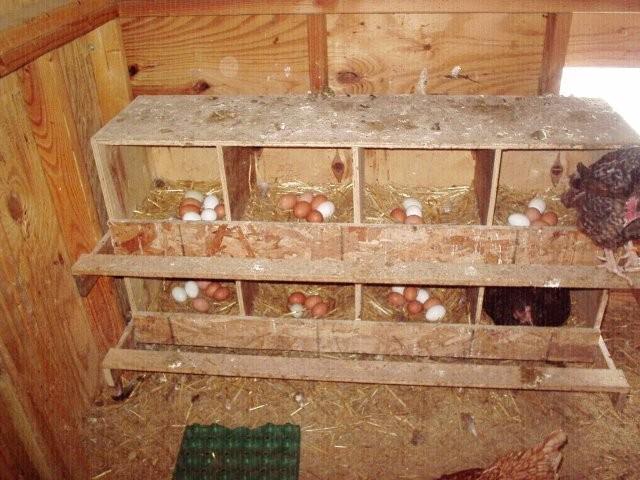
Look no further for your “Chicken Encyclopedia”. Treats for Chickens has made this easy-to-view and understand list of the most commonly used chicken terms. With fun pictures to go along! Terms listed are P-Z
Pasting Manure sticking to the rear end of a young chick. Can be fatal! Remove manure with a cotton ball dipped in warm water.
Pecking Order The order and social ranking of a group of chickens.

Clearly you can tell who’s in “pecking order” here.. (Photo credit)
Pellet Pellets are feed that is formed from a fine mash bonded together.

Example of a pellet is on the far right. Pumpkin Seed Snacks and Cluck Yea are two organic treats that have a nutritional pellet with egg-enhancing benefits
Point of lay A young pullet about 18 weeks old, the age at which the bird could start laying.

About the size of your hen to start expecting her first egg (Photo credit)
Predators Raccoon’s are clever and ravenous. Skunks, dogs, cats, and even hawks may also harm chickens.
Primary feathers The first ten feathers on the wing starting at the tip.
Perch A pole or dowel which a chicken sleeps on at night, also called a roost. A sturdy tree branch works great too.
Plumage The feathering of a chicken as a whole.

This is Gold-Laced Wyandotte chicken. Her entire feathering is considered the plumage (Photo credit)
Pubic Bones The two bones sticking out from either side of the vent.

The index finger and the ring finger are on this chicken’s pubic bones (Photo credit)
Pullet A female chicken less than one year old.
Roost A pole or sturdy branch a chicken sleeps on at night.
Rooster A male chicken a year or more old. Also referred to as a Cock or Cockerel.
Run A chicken’s outdoor area. It should be fenced to keep chickens in and predators out. If you let the flock run during the day (and we know that you will), always close the coop door before nightfall.

Good example of a run; freedom for the chickens to roam, but within a restricted section as to keep them safe (Photo credit)
Scales The horny tissue covering the toes and legs.
Scratch Whole or cracked grain fed to chickens. Given as treats and can be fattening.

Corn, wheat, and milo make up this chicken scratch (Photo credit)
Setting The incubation of eggs in the nest by a sitting hen.
Sexed Chicks that have been professionally sorted by sex.
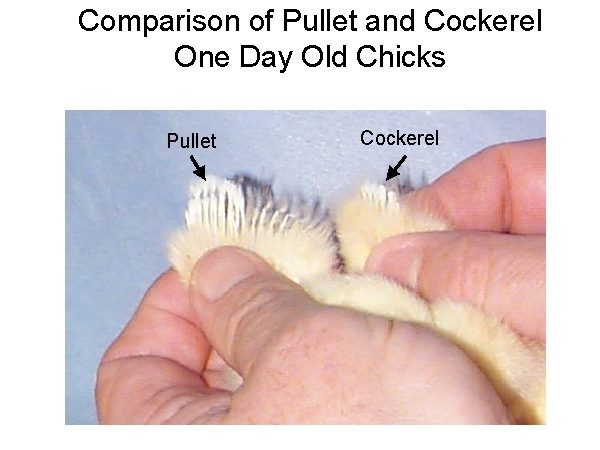
One way to tell the difference between a hen and a rooster (Photo credit)
Shank The lower leg of a chicken.
Spur The sharp bony points on the back of a rooster’s shanks. Used for fighting and protection.

The long, pointy part behind the shank is the spur (Photo credit)
Straight Run Chicks that have not been professionally sexed. Bantams are commonly sold Straight Run due to the difficulty of sexing the tiny chicks.

This is bantam chick. She will grow up and be very tiny compared to standard chickens. It is very difficult to sex a bantam due to their size (Photo credit)
Vent The opening at the rear of a chicken where the digestive, urinary and reproductive tracts end.
Wattles The fleshy colored appendages hanging from either side of the lower beak.
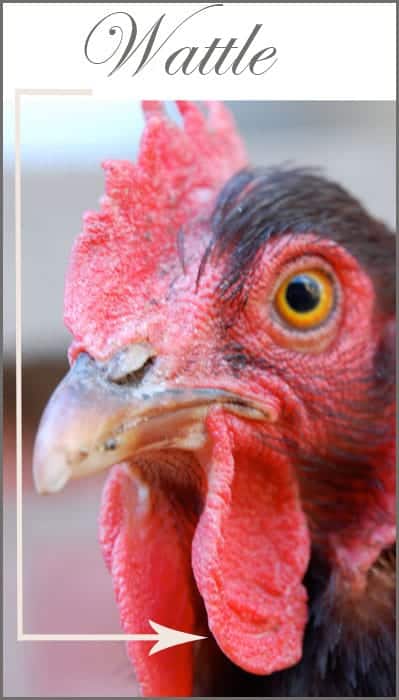
Blood flow from the comb to the wattle helps regulate the chicken’s temperature (Photo credit)
That’s it! You’ve reached the end of our Chicken Encyclopedia. Hope you enjoyed, and learned a lil’ something. Our list contains just the most commonly used terms, however we are constantly adding to it. If you have a suggestion of a chicken term you would like to see be added, please don’t hesitate to reach out! We love your feedback. Comment below and let us know.